Buffer packaging material
Buffer Packaging Material for Product Protection and Positioning
Buffer packaging material is designed to help position, separate, cushion, and protect products during handling, storage, and transportation. For electronic components, precision parts, hardware, instruments, and other products, a customized packaging structure can help reduce unnecessary movement and direct contact between individual items.
WELL CHSIEN provides customized vacuum formed packaging solutions for electronic products and a wide range of industrial applications. Packaging trays, plastic linings, cavities, and protective structures can be developed according to the dimensions, shape, weight, and packaging requirements of the customer's actual product.
Customers can provide product samples, drawings, dimensions, photographs, or existing packaging for customized design and manufacturing evaluation.
What Is Buffer Packaging Material?
Buffer packaging material refers to packaging designed to create a protective structure between a product and its surrounding environment.
Depending on the application, the packaging may help:
-
Position products inside the package
-
Separate individual components
-
Reduce unnecessary movement
-
Reduce direct contact between products
-
Organize multiple components
-
Support convenient product handling
-
Provide a customized internal packaging structure
-
Improve product presentation
Unlike generic packaging fillers, a custom vacuum formed tray or lining can be developed around the actual shape and dimensions of the product.
This makes customized buffer packaging material particularly useful for electronic products, precision components, industrial parts, and products with specific positioning requirements.
Buffer Packaging Material Applications
Custom protective packaging can be developed for many different products.
| Application | Packaging Function |
|---|---|
| Electronic Components | Individual positioning and separation |
| Precision Parts | Customized cavities for organized handling |
| Electronic Products | Protective internal packaging |
| Industrial Components | Product-specific positioning |
| Communication Equipment | Customized tray and lining |
| Mechanical Hardware | Organized component packaging |
| Instruments | Dedicated product cavities |
| Consumer Products | Protection and product presentation |
| OEM Products | Packaging according to customer specifications |
The appropriate packaging structure should be selected according to the actual product rather than relying on one universal packaging solution.
Custom Buffer Packaging Material
Different products require different levels of positioning, separation, cushioning, and protection.
A customized packaging design can take the geometry of the actual product into consideration.
Customization options may include:
-
Overall tray dimensions
-
Cavity dimensions
-
Cavity depth
-
Number of cavities
-
Product orientation
-
Component spacing
-
Material selection
-
Material thickness
-
Outer packaging dimensions
-
Stacking requirements
-
Product removal space
-
Customer-specific design requirements
This makes custom buffer packaging useful when standard packaging cannot provide the required internal configuration.
Buffer Packaging Material for Electronic Products
Electronic products and components often require organized packaging because multiple parts may need to be stored or transported in one package.
A custom electronic packaging tray can provide dedicated positions for individual components.
Depending on the product, a customized structure can help keep components separated and reduce unnecessary movement during normal handling.
Typical applications may include:
-
Electronic parts
-
Electronic assemblies
-
Precision components
-
Communication equipment parts
-
Industrial electronic products
-
Small mechanical components
-
Hardware components
-
Technology products
For static-sensitive electronic components, customers should separately specify any required antistatic or conductive material properties.
Buffer Packaging Material Specifications
| Item | Customization |
|---|---|
| Product | Buffer Packaging Material |
| Packaging Type | Tray / Lining / Custom Protective Packaging |
| Overall Dimensions | Customizable |
| Cavity Dimensions | According to product |
| Cavity Quantity | Customizable |
| Cavity Depth | Customizable |
| Material | According to project requirements |
| Material Thickness | According to application |
| Product Position | Customizable |
| Manufacturing | Vacuum Forming |
| OEM | Available |
| ODM | Available |
| Sample-Based Design | Available for evaluation |
| Drawing-Based Design | Available for evaluation |
Final specifications should be confirmed according to the actual product and packaging requirements.
Why Use Custom Buffer Packaging Material?
A generic box provides external containment, but it may not provide dedicated internal positioning.
Custom buffer packaging can add a product-specific internal structure.
Product Positioning
Cavities can be developed according to the shape and dimensions of the product.
Component Separation
Multiple components can be separated into individual positions.
Reduced Movement
A correctly sized cavity can help reduce unnecessary movement inside the package during normal handling.
Organized Packaging
Products and accessories can be arranged systematically within a single tray or packaging structure.
Customized Dimensions
Overall tray size and internal cavities can be developed around the customer's product.
OEM and ODM Manufacturing
Packaging can be evaluated according to customer samples, drawings, existing packaging, and product requirements.
Custom Buffer Packaging vs. Standard Packaging
| Feature | Custom Buffer Packaging | Standard Packaging |
|---|---|---|
| Product-Specific Cavities | Yes | Usually No |
| Custom Dimensions | Available | Usually Fixed |
| Component Separation | Customizable | Limited |
| Internal Positioning | Product-Specific | General |
| Cavity Quantity | Customizable | Predetermined |
| Material Selection | According to Project | Usually Fixed |
| OEM / ODM | Available | Depends on Supplier |
| Sample-Based Design | Available | Usually Not |
| Electronic Product Application | Customizable | General-Purpose |
For products with unusual dimensions or multiple components, customized packaging can provide a more appropriate internal layout.
Vacuum Formed Buffer Packaging Material
Vacuum forming is well suited to producing customized plastic trays and packaging linings.
During product development, a mold is created according to the required packaging geometry. Plastic sheet material is then formed to produce the required cavities and structural features.
Vacuum forming can be used to manufacture:
-
Electronic packaging trays
-
Protective plastic linings
-
Component trays
-
Product positioning trays
-
Packaging inserts
-
Custom plastic packaging
-
Industrial product trays
-
Precision component packaging
For a new project, the design can be evaluated according to an actual product sample or detailed dimensional drawing.
Buffer Packaging Material Design Considerations
Good protective packaging starts with understanding the actual product.
| Design Factor | Why It Matters |
|---|---|
| Product Dimensions | Determines cavity size |
| Product Shape | Determines cavity geometry |
| Product Weight | Influences packaging structure |
| Number of Products | Determines cavity quantity |
| Product Orientation | Influences layout |
| Fragile Areas | Helps determine contact points |
| Material | Affects packaging characteristics |
| Thickness | Influences structural performance |
| Outer Box Size | Determines overall tray dimensions |
| Handling Method | Influences packaging design |
| Stacking | May affect tray structure |
| Special Requirements | Must be specified before production |
Providing detailed product information helps the manufacturer develop a packaging solution based on actual requirements rather than assumptions.
How to Choose Buffer Packaging Material
Before choosing a buffer packaging material, consider the complete packaging system rather than only the plastic material.
First, determine what the packaging needs to accomplish.
Does the product need individual positioning? Does the package contain multiple components? Is the product sensitive to movement or contact? Does the customer require antistatic or conductive properties?
Next, provide accurate product dimensions and application information.
For customized projects, an actual sample can be especially useful because it allows the packaging structure to be evaluated around the real product.
Buffer Packaging Material for Precision Components
Precision products may have surfaces, edges, connectors, or other areas that should not be subjected to unnecessary contact during packaging.
A custom tray can be designed with dedicated product positions and appropriate spacing between individual components.
The packaging layout can also be developed according to the required quantity per tray.
This type of design is suitable for customers who need repeatable product placement and organized handling throughout packaging and transportation processes.
Electronic Buffer Packaging Material
Electronic packaging requires consideration of both physical packaging structure and the characteristics of the electronic component.
For ordinary electronic products, a customized plastic tray can provide organized positioning and separation.
For components requiring ESD control, however, ordinary plastic packaging should not automatically be considered suitable.
Customers requiring static-control packaging should specify whether the project requires:
-
Antistatic material
-
Conductive material
-
Specific surface resistance
-
Customer-defined ESD specifications
The material and packaging structure can then be evaluated according to the actual project requirements.
Protective Packaging Material vs. Antistatic Packaging
These two terms describe different packaging functions.
| Feature | Buffer Packaging | Antistatic Packaging |
|---|---|---|
| Main Purpose | Physical positioning and protection | Static-control requirements |
| Custom Cavities | Available | Available |
| Component Separation | Available | Available |
| ESD Properties | Not automatically included | Required according to specification |
| Electronic Applications | Yes | Yes |
| Material Selection | Application-dependent | ESD requirement-dependent |
A packaging tray may potentially require both physical positioning and static-control characteristics, but those requirements should be specified separately.
OEM / ODM Buffer Packaging Material
WELL CHSIEN provides customized vacuum formed packaging manufacturing and accepts OEM/ODM projects.
For a new buffer packaging project, customers can provide:
-
Physical product samples
-
Existing packaging samples
-
2D or 3D drawings
-
Product dimensions
-
Product photographs
-
Required quantity per tray
-
Required tray dimensions
-
Material requirements
-
Thickness requirements
-
Outer box dimensions
-
ESD requirements, if applicable
-
Estimated order quantity
-
Special packaging requirements
Based on this information, the packaging structure can be evaluated according to manufacturing feasibility and customer requirements.
Actual Buffer Packaging Material Product Example
The electronic packaging products shown on this page demonstrate WELL CHSIEN's capability in manufacturing customized vacuum formed packaging and plastic linings.
The packaging structure can be developed according to the actual dimensions and shape of the customer's product.
Cavity size, cavity depth, quantity, spacing, material, thickness, and overall tray dimensions can be customized according to product and packaging requirements.
Using actual manufactured products and photographs provides customers with a clearer understanding of the packaging structure and manufacturing capabilities.
Buffer Packaging Material Manufacturer
WELL CHSIEN has more than 30 years of experience in vacuum forming and customized plastic packaging manufacturing.
Manufacturing capabilities include electronic packaging, component trays, packaging linings, antistatic boxes, electronic boxes, TRAY disks, hardware packaging, communication equipment packaging, product packaging boxes, and other customized vacuum formed plastic products.
Customers developing a new buffer packaging material solution can provide actual products, samples, drawings, dimensions, or existing packaging for evaluation.
OEM and ODM customized manufacturing projects are welcome.
Frequently Asked Questions About Buffer Packaging Material
What is buffer packaging material?
Buffer packaging material is packaging designed to provide positioning, separation, cushioning, or protection between a product and its surrounding packaging environment.
What products can use buffer packaging?
Applications include electronic products, precision components, industrial parts, communication equipment, hardware, instruments, consumer products, and other products requiring customized internal packaging.
Can buffer packaging be customized?
Yes. Overall dimensions, cavity dimensions, cavity depth, quantity, spacing, material, thickness, and internal layout can be customized according to product requirements.
Can you design packaging according to my product?
Customers can provide actual product samples, drawings, dimensions, photographs, or existing packaging for customized manufacturing evaluation.
What is vacuum formed buffer packaging?
It is protective packaging produced by forming plastic sheet material into a customized shape using vacuum forming technology. This process can create dedicated cavities and product-positioning structures.
Is buffer packaging suitable for electronic components?
Yes, customized trays and linings can be developed for electronic products and components. If the components require ESD protection, the relevant antistatic or conductive specifications should be provided separately.
Is buffer packaging antistatic?
Not automatically. Physical buffer packaging and antistatic packaging describe different functions. If antistatic performance is required, it should be specified during product development.
Can conductive material be used?
Conductive packaging can be evaluated for applications requiring conductive material properties. Customers should provide the required electrical specifications.
Can each component have an individual cavity?
Yes. Individual cavities can be designed according to product dimensions, quantity, spacing, and overall tray requirements.
Can multiple products be packed in one tray?
Yes. A customized layout can accommodate multiple products or different components within the same tray, subject to design and manufacturing feasibility.
Can the tray fit an existing outer box?
Yes. Customers can provide the internal dimensions of the existing outer box so the tray dimensions can be evaluated accordingly.
Can you manufacture from an existing packaging sample?
Existing packaging samples can be provided for evaluation, along with the actual product whenever possible.
Do you accept OEM packaging projects?
Yes. OEM and ODM projects can be evaluated according to customer samples, drawings, dimensions, material requirements, and packaging specifications.
What information is required for a quotation?
Provide product dimensions, product samples or drawings, required quantity per tray, overall packaging dimensions, material requirements, thickness requirements, outer box dimensions, special properties such as ESD requirements, and estimated order quantity.
How do I select the correct buffer packaging material?
Selection should be based on product dimensions, shape, weight, fragility, handling conditions, packaging method, material requirements, ESD requirements where applicable, and transportation conditions.
Related Products and Internal Links
For electronic products requiring customized internal packaging, explore our Electronic Packaging solutions.
For static-sensitive electronic components, see our Antistatic Working Disk products.
For applications requiring conductive material properties, explore our Conductive Working Disk solutions.
For customized component handling, see our Electronic Work Disk products.
For product protection using internal plastic structures, explore our Packaging Lining solutions.
To learn more about the manufacturing process, see our Vacuum Forming capabilities.
Recommended Internal Link Anchor Text
Buffer packaging material
Electronic packaging
Electronic buffer packaging
Protective packaging material
Custom packaging tray
Vacuum formed packaging
Electronic component packaging
Packaging lining
Antistatic packaging
Conductive packaging
Custom plastic tray
Vacuum forming manufacturer
Recommended Image ALT Text
-
Buffer packaging material
-
Electronic buffer packaging material
-
Custom buffer packaging material
-
Protective packaging material for electronic products
-
Vacuum formed buffer packaging tray
-
Electronic component packaging tray
-
Custom electronic packaging lining
-
Buffer packaging tray for precision components
-
Custom protective plastic packaging
-
Electronic product buffer packaging
-
Vacuum formed electronic packaging
-
OEM buffer packaging material
Recommended Image Title / Tag Text
-
Buffer Packaging Material
-
Electronic Buffer Packaging
-
Custom Buffer Packaging
-
Protective Packaging Material
-
Electronic Packaging Tray
-
Vacuum Formed Packaging
-
Electronic Component Packaging
-
Custom Packaging Lining
-
Protective Plastic Tray
-
OEM Buffer Packaging
Product Image Caption
Actual Buffer Packaging Material Product Example
This custom buffer packaging material is designed to position, separate, and protect electronic or precision products inside the package. Cavity dimensions, depth, quantity, layout, material, thickness, and overall tray size can be customized according to customer product and packaging requirements.
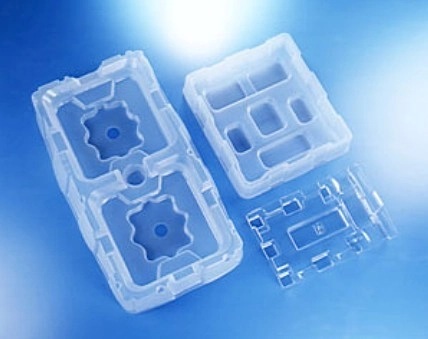 Buffer Packaging Material – Actual Product Example
This custom buffer packaging material is designed to position, separate, and protect electronic products and precision components during handling, storage, and transportation.
The cavity dimensions, depth, quantity, spacing, material, thickness, and overall tray size can be customized according to customer product specifications. WELL CHSIEN provides custom vacuum formed packaging trays and protective linings based on customer samples, drawings, and packaging requirements.