Packaging Lining: Custom Solutions for Product Protection and Presentation
Packaging Lining is an important part of modern product packaging, especially when products require secure positioning, separation, protection, organization, or improved presentation. Unlike general-purpose cushioning materials, a custom-designed packaging lining can be formed according to the actual dimensions and shape of a product, creating a dedicated space that keeps each item properly positioned inside the package.
Packaging Lining can be used for electronic components, precision parts, hardware products, communication equipment, gifts, cosmetics, accessories, industrial components, and many other applications. Depending on the product and packaging requirements, the lining can be designed with single or multiple cavities, different depths, customized shapes, and various plastic materials.
For manufacturers and buyers, choosing the right Packaging Lining is not simply about appearance. Product dimensions, weight, surface characteristics, fragility, transportation conditions, storage requirements, presentation, material selection, and production quantity should all be considered during packaging development.
A well-designed lining provides a practical connection between the product and its outer packaging, helping create a more organized and product-specific packaging solution.
What Is Packaging Lining?
Packaging Lining refers to an inner packaging component designed to fit inside a box, container, carton, or other outer packaging.
Its primary purpose is to create a dedicated structure for holding and organizing the packaged product.
Instead of allowing products to move freely inside a box, a custom lining can provide individual cavities or compartments according to the product's dimensions and shape.
Depending on the design, Packaging Lining can help:
• Position products securely inside the package
• Separate individual products or components
• Reduce unnecessary movement during handling
• Reduce direct contact between different parts
• Organize accessories and components
• Improve product presentation
• Make products easier to place and remove
• Create dedicated spaces for irregularly shaped products
• Improve overall packaging organization
For products containing several components, one lining can also incorporate multiple cavities, allowing the main product and accessories to be organized within a single packaging structure.
How Does Packaging Lining Work?
The basic principle of Packaging Lining is simple: the internal structure of the package is designed around the product rather than forcing the product to fit into a generic package.
Product dimensions and packaging requirements are first evaluated. A suitable cavity layout can then be developed according to product shape, height, positioning requirements, and the number of components that need to be packaged.
When vacuum forming is used, a thermoplastic sheet is heated until it becomes formable and is then formed against a mold. After cooling, the plastic retains the designed contours and cavities.
This manufacturing method makes it possible to repeatedly produce product-specific inner packaging structures for commercial and industrial applications.
Packaging Lining Design Considerations
Before developing Packaging Lining, several factors should be evaluated.
| Design Factor | What Should Be Considered |
|---|
| Product Size |
Length, width, height and overall dimensions |
| Product Shape |
Regular, irregular, curved or complex geometry |
| Product Weight |
Appropriate structure and material strength |
| Product Surface |
Whether additional surface protection is required |
| Number of Products |
Single product or multiple components |
| Cavity Layout |
Position and spacing between individual items |
| Cavity Depth |
Product height and required holding structure |
| Transportation |
Expected handling and movement |
| Display |
Whether product presentation is important |
| Static Control |
Whether electronic components require special materials |
| Quantity |
Production requirements and project volume |
Accurate product information is important during development. Product drawings, dimensions, samples, packaging requirements, and intended applications can help determine an appropriate lining design.
Materials Used for Packaging Lining
Different plastic materials provide different characteristics. Material selection should therefore be based on the actual product and application rather than choosing a material only by appearance.
Common materials used for vacuum formed packaging applications include PET, PS, PP, and PVC.
| Material | General Characteristics | Typical Considerations |
|---|
| PET |
Good transparency and toughness |
Suitable when product visibility is important |
| PS |
Good rigidity and formability |
Commonly used for formed trays and lining |
| PP |
Lightweight with good chemical resistance |
Suitable for various specialized applications |
| PVC |
Good transparency and formability |
Used for various formed packaging applications |
| Antistatic Material |
Helps manage static electricity |
Consider for suitable electronic components |
| Conductive Material |
Used where greater static-control performance is required |
Electronic and precision applications |
The final material should be selected according to product characteristics, packaging function, processing requirements, storage environment, and other project-specific considerations.
Packaging Lining for Electronic Components
Electronic products and precision components often require organized packaging because individual parts may need to remain separated and correctly positioned.
Packaging Lining can be designed with individual cavities for electronic parts, components, connectors, communication products, precision instruments, or related accessories.
When static electricity is a concern, appropriate antistatic or conductive materials should be considered according to the specific product requirements.
A dedicated cavity layout can also make component counting, handling, inspection, storage, and transportation more organized.
Packaging Lining for Hardware and Industrial Components
Hardware and industrial parts vary greatly in size, weight, geometry, and surface characteristics.
Some products may be long and narrow, while others have irregular shapes, protruding sections, or several accessories that need to be packaged together.
Custom Packaging Lining can create dedicated positions for these components instead of relying entirely on loose cushioning.
Typical applications may include:
• Mechanical components
• Hardware parts
• Tools and accessories
• Precision components
• Connectors
• Industrial accessories
• Automotive-related components
• Communication equipment parts
The actual cavity design should be determined according to the product rather than using one standard structure for every application.
Packaging Lining for Gifts and Consumer Products
Protection is not the only purpose of Packaging Lining. Presentation can also be important.
For gifts, cosmetics, accessories, jewelry, consumer electronics, and other presentation-oriented products, the inner lining helps establish the position of each item when the package is opened.
A properly planned layout can separate the main product from accessories while presenting the contents in an organized manner.
Depending on the application, transparent plastic, colored material, or additional surface treatment may be considered to coordinate the inner packaging with the overall product presentation.
Packaging Lining Applications
Packaging Lining can be adapted to many different product categories.
| Industry / Product | Possible Packaging Lining Function |
|---|
| Electronic Components |
Positioning and separation |
| Precision Parts |
Individual cavities and organization |
| Hardware Products |
Component positioning |
| Industrial Parts |
Custom-shaped cavities |
| Communication Equipment |
Product and accessory organization |
| Consumer Electronics |
Positioning and presentation |
| Gifts |
Organized product presentation |
| Cosmetics |
Bottle and accessory positioning |
| Jewelry & Accessories |
Product positioning and display |
| Sports Products |
Custom product holding |
| Tools |
Tool and accessory organization |
| Retail Products |
Positioning and presentation |
Because every product has different requirements, these applications should be treated as examples rather than fixed specifications.
Standard Packaging vs. Custom Packaging Lining
Standard packaging may be sufficient for simple products, but products with specific positioning or organizational requirements may benefit from a custom lining.
| Feature | General Packaging | Custom Packaging Lining |
|---|
| Product Fit |
General |
Designed according to product |
| Cavity Shape |
Standard or none |
Product-specific |
| Positioning |
Limited |
Dedicated positioning |
| Multiple Components |
May require separate materials |
Multiple cavities can be integrated |
| Organization |
Basic |
Product-specific |
| Presentation |
General |
Customized layout |
| Material Selection |
Standard |
Selected according to application |
| Dimensions |
Predetermined |
Can be developed for the product |
Packaging Lining Manufacturing Process
A custom project generally begins with understanding the product and its intended packaging application.
| Step | Development Stage | Main Purpose |
|---|
| 1 |
Product Review |
Understand dimensions and product characteristics |
| 2 |
Requirement Confirmation |
Determine packaging and application requirements |
| 3 |
Layout Planning |
Determine product position and cavity arrangement |
| 4 |
Material Selection |
Select material according to application |
| 5 |
Mold Development |
Develop the required forming structure |
| 6 |
Vacuum Forming |
Form the plastic sheet |
| 7 |
Finishing |
Complete trimming and related processing |
| 8 |
Inspection |
Check the finished packaging |
| 9 |
Production |
Manufacture according to confirmed requirements |
Actual processes may vary depending on product design and project requirements.
How to Choose Packaging Lining
The best Packaging Lining is not necessarily the thickest or most complex design. It should be appropriate for the product and its actual use.
Before requesting a quotation or starting a packaging project, consider preparing the following information:
• Product dimensions
• Product drawings, if available
• Physical product sample, if available
• Product weight
• Number of items per package
• Required cavity arrangement
• Preferred material, if known
• Color requirements
• Static-control requirements, if applicable
• Expected order quantity
• Outer packaging dimensions, if already determined
• Special transportation or display requirements
Providing complete information helps the packaging manufacturer evaluate the project more accurately.
Actual Packaging Lining Manufacturing Experience
Packaging is most useful when it is developed around real products and real manufacturing requirements.
The Packaging Lining products shown on this page represent different vacuum formed packaging applications. Actual projects may vary in dimensions, cavity shape, depth, material, thickness, color, product arrangement, and packaging structure.
Instead of applying one identical design to every product, the lining structure should be evaluated according to the characteristics of the item being packaged.
Product samples and actual manufacturing photos are also useful references for buyers because they demonstrate how different cavity structures, shapes, and layouts can be applied to real packaging projects.
Why Choose Custom Packaging Lining?
Custom Packaging Lining allows the inner packaging structure to be developed around the product.
This can be especially useful when a product has an irregular shape, contains multiple components, requires organized positioning, or needs a specific presentation inside the outer package.
A customized solution can integrate product positioning, separation, organization, material selection, and presentation into one packaging structure.
For a new Packaging Lining project, provide the product dimensions, drawings or samples, estimated quantity, intended application, and any special requirements. These details make it easier to evaluate the appropriate material, cavity layout, and manufacturing method.
Packaging Lining FAQ
What is Packaging Lining?
Packaging Lining is an inner packaging structure designed to hold, position, separate, organize, or protect products inside an outer package. It can be customized according to product dimensions and shape.
What is the main purpose of Packaging Lining?
Its purpose depends on the application. Common functions include product positioning, separation, organization, reducing movement inside the package, and improving presentation.
Can Packaging Lining be customized?
Yes. Dimensions, cavity shape, cavity depth, number of compartments, material, layout, and other characteristics can be developed according to the actual product and packaging requirements.
What materials can be used for Packaging Lining?
Depending on the application and manufacturing process, materials such as PET, PS, PP, and PVC may be considered. Special antistatic or conductive materials may also be suitable for certain electronic applications.
Is Packaging Lining suitable for electronic products?
Yes. Packaging Lining can be designed for electronic components and related products. If static electricity is a concern, the appropriate static-control material should be evaluated according to the specific application.
Can one Packaging Lining hold multiple components?
Yes. Multiple cavities or compartments can be incorporated into a single lining, allowing the main product, parts, and accessories to be organized together.
Can Packaging Lining be used for irregularly shaped products?
Yes. One advantage of custom formed lining is that cavity structures can be developed according to irregular product shapes and dimensions.
What information is needed to develop Packaging Lining?
Useful information includes product dimensions, drawings or samples, weight, required quantity, number of products per package, material requirements, intended application, and any special packaging requirements.
How do I choose the right material for Packaging Lining?
Material selection depends on factors such as product characteristics, rigidity requirements, transparency, storage environment, static-control requirements, manufacturing process, and intended use. The material should be evaluated according to the actual application.
Is Packaging Lining only used for product protection?
No. Packaging Lining can also provide positioning, separation, organization, handling convenience, and product presentation. The required functions should be determined during packaging development.
Is vacuum forming suitable for Packaging Lining?
Vacuum forming is commonly used to manufacture customized plastic trays, inserts, and lining structures because the plastic sheet can be formed according to a designed mold and product-specific cavity layout.
How can I request a Packaging Lining quotation?
Prepare the product dimensions, drawings or physical samples, estimated quantity, material requirements, intended application, and any special requirements. Providing detailed information helps the manufacturer evaluate the packaging project more accurately.
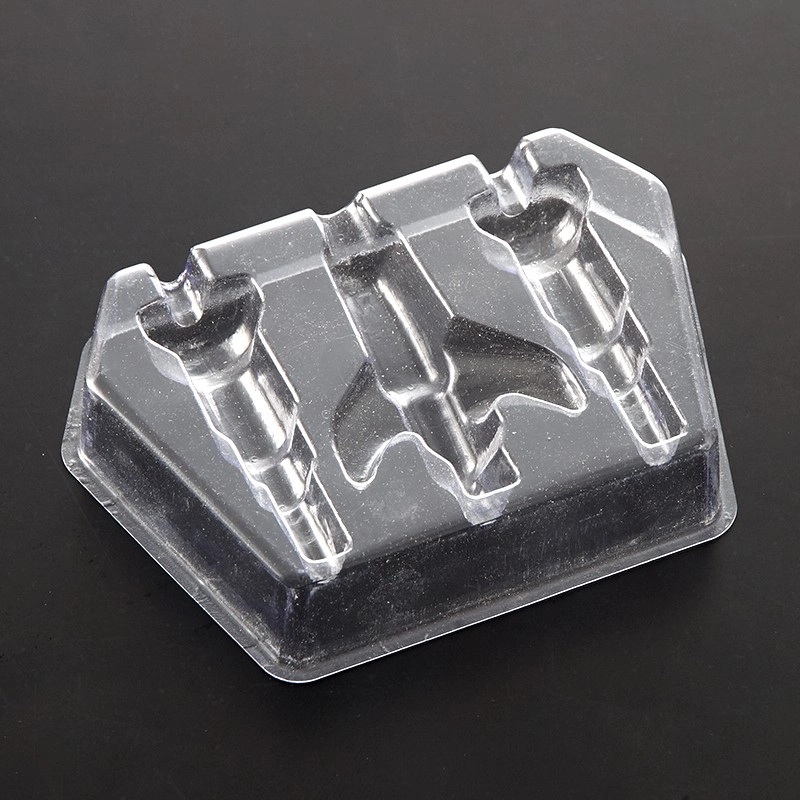 Actual Packaging Lining Products